
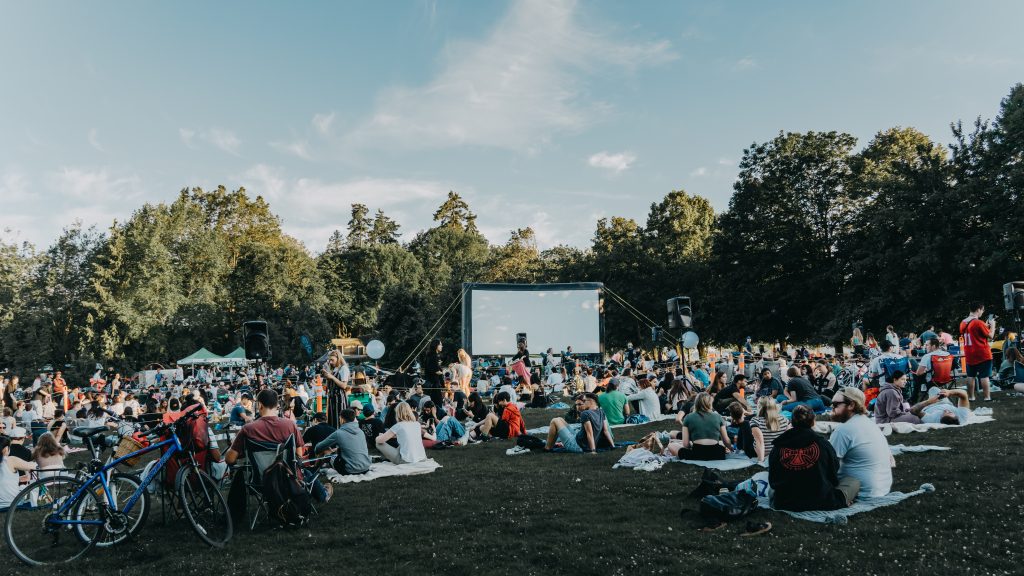
From municipal parks and sports complexes to stadiums, festival grounds, and even school athletic facilities, demand for digital connectivity at events has grown exponentially. No longer just a convenience, high capacity Wi-Fi has become a must-have for supporting operations, public safety, economic development, commerce, marketing, and the overall event experience.
As cities and public entities modernize their event spaces, high-capacity, high-reliability Wi-Fi capable of accommodating large crowds is proving to be a strategic investment.
Already 57 percent of event organizers report an increase in event attendance over the past year and four out of ten say they plan to host more events in the future. As a result, venues and municipalities can expect even more visitors, straining current bandwidth and infrastructure. At the same time, the global public Wi-Fi market is expected to nearly triple, from $12.8 billion to over $34 billion by 2034, driven by surging demand for connectivity in public venues.
That means Smart City, municipal, and even campus venue operators who invest in robust, high-capacity Wi-Fi infrastructure now can position themselves to meet users’ expectations and enhance growth, revenue, and market opportunities.
But the right approach extends far beyond just installing consumer-grade access points. It requires a platform with sophisticated traffic management, built-in security, and digital engagement tools that help venues operate efficiently and sustainably.
Safety First
In any large gathering, safety must always be a top priority, and a modern public Wi-Fi system plays an integral role. Public spaces rely on clear visibility and uninterrupted communication, and robust Wi-Fi can support both through video surveillance and dedicated connectivity for first responders and staff.
When the city of La Quinta, California, developed a next-generation skate park and event space with plans to host major events and competitions, the safety and experience of attendees were top of mind.
The entire park was outfitted with integrated smart poles equipped with cameras, lighting, charging capabilities, and venue-wide Wi-Fi. The design ensured law enforcement, EMS, and city teams had continuous, high-priority network access, with public safety traffic automatically prioritized through Quality of Service (QoS) policy and controls.
This design means emergency communications always have the “fast lane,” regardless of crowd size or user activity. While public users remain connected, they can’t overwhelm systems critical to event operations and safety.
Support Operations, Payments, and Media
Large events rely on dozens of critical digital systems for efficient operations. Concessions, ticketing, POS terminals, credentialing, staff communication, and media broadcasting all depend on reliable bandwidth.
For example, before upgrading its connectivity infrastructure, a major tournament venue in California struggled with slowdowns that impacted guests, media, and on-site vendors. After modernizing the network, the venue was able to support record crowds and more than 28,500 simultaneous connections during peak periods with no performance degradation, even during heavy traffic spikes.
Automated load balancing and segmentation ensure that mission-critical systems like cashless concessions and digital ticket scanning remain fully operational. Meanwhile, public users stay connected without taking bandwidth away from essential operations or live media broadcasts.
This type of segmentation is especially important for schools and municipalities, where liability and network integrity matter. Administrators can isolate staff, POS, public safety, and visitor traffic to maintain performance and security for every user group.
Expand Access and Digital Equity
Public Wi-Fi also plays an increasing role in community engagement and digital equity. Parks, recreation areas, and school facilities often act as gathering spaces for young people, many of whom rely on mobile devices for schoolwork, communication, or creating digital content.
By offering managed and automatically balanced Wi-Fi access with clear usage limits, venues can create safe, connected spaces that align with community priorities. Time-limited sessions prevent bandwidth hoarding, while access restrictions can block malicious or inappropriate sites. These controls allow organizations to support equitable access without sacrificing security or performance.
Strengthen Marketing, Sponsorship, and Visitor Engagement
For event organizers, Wi-Fi has become a powerful marketing and revenue growth tool. Captive portals, splash pages, and tiered access can enable sponsor messages or promotions that generate direct income, while also enabling engagement with venue-specific content, gathering demographic insights, and collecting post-event feedback through surveys.
A local business, for instance, can underwrite Wi-Fi for a high-school stadium and promote itself through custom splash pages. For larger events, national brands can deliver targeted promotions to thousands of attendees, such as offering free Wi-Fi in a VIP area in exchange for visitors tagging their social posts with the brand logo or specific hashtags.
Case in point: At the Mauka Warriors Luau in Hawaii, guest Wi-Fi has become a core part of the visitor experience and overall brand reach. The venue regularly sees hundreds of simultaneous connections as guests livestream their luau experience, share photos, and post content in real time—activity that amplifies the venue’s visibility far beyond the island.
Plan for Future-Ready Community Spaces
As urban planners and public-sector leaders consider the future of community infrastructure, Wi-Fi connectivity must be a core foundation. Whether supporting high-visibility sporting events, municipal festivals, student activities, or daily park usage, high-capacity Wi-Fi ensures that spaces remain functional, secure, and relevant.
Cities and organizations planning for a new implementation or an upgrade should consider prioritizing these features in a vendor:
- Capacity and scalability to support thousands of simultaneous users.
- Traffic prioritization that ensures critical systems always receive bandwidth.
- Built-in security and segmentation to protect staff, vendors, and public users.
- Ease of management to reduce on-site technical complexity.
- Data and analytics for insights to inform future events or capital improvement planning.
- Sponsorship and revenue opportunities through captive portals and splash pages.
Public Wi-Fi is no longer ancillary or merely convenient. It is a strategic asset that improves safety, operations, economic development, and community engagement. As municipalities and venues continue to modernize, those that invest in a resilient, scalable Wi-Fi network will be best positioned to meet growing expectations, both for audiences today and the events and technologies yet to come.
The author, Angela Quinn is the Senior Director of Business Development – the Americas for Nomadix, an ASSA ABLOY company.